Party Charades: Headbands Game
- 4.5
- Rating
- 1.00M
- Installs
- Free
- Price

 Analysis by App-foxy
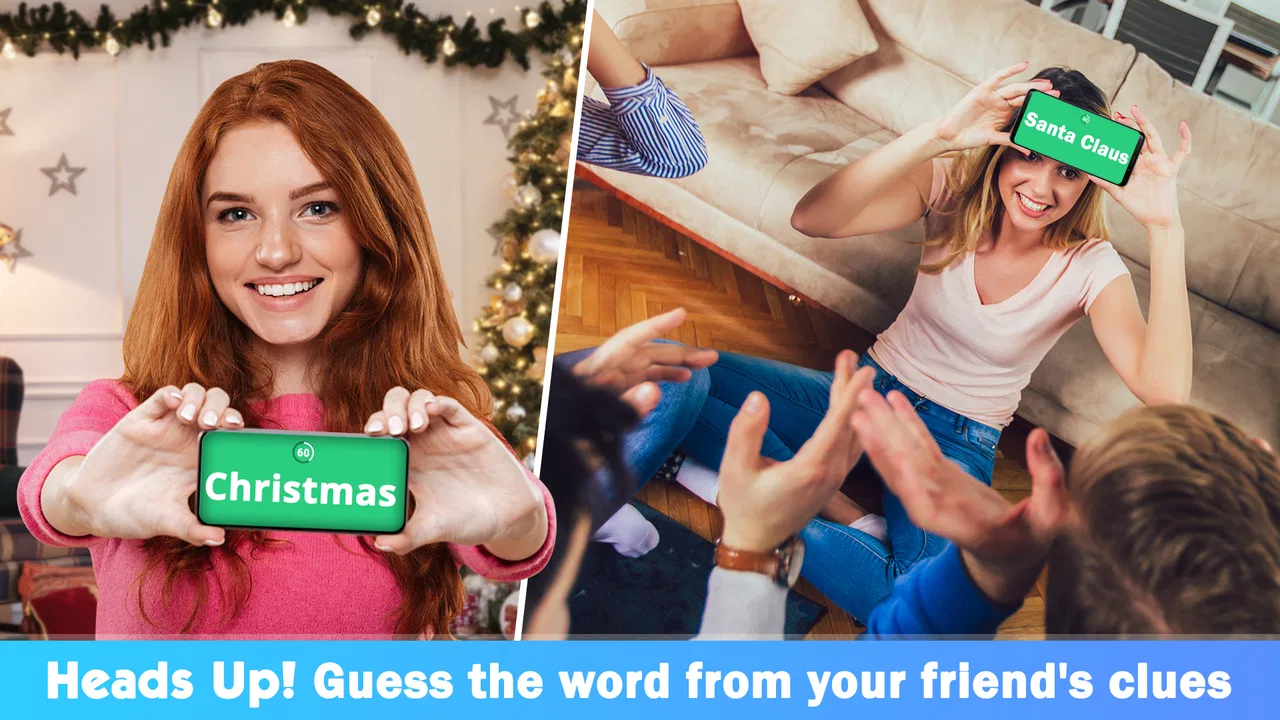
I tried Party Charades: Headbands Game as the kind of word game people bring out when several people are in the same room and nobody wants to explain complicated rules. Its basic appeal is immediate: one player holds the phone, another person tries to guess the hidden word, and everyone else can join the fun by giving clues or reacting to the guesses. That makes it a natural fit for a living room, a holiday gathering, or a relaxed afternoon with friends.
What I like most is that the game does not ask the group to prepare much before starting. There is no long tutorial to study and no strategy system to learn. The phone is simply the center of the round, while the people around it create most of the entertainment. That is also the main thing to understand before downloading it: this is a social word game, not a solo puzzle app with a large progression system.
How it works when the phone is shared
In a typical household session, I would hand the device to the person whose turn it is, let that player see the prompt, and have the rest of the group communicate clues without saying the answer directly. The fun comes from the gap between what the clue-givers intend and what the guessing player actually understands. A simple word can produce surprisingly strange interpretations, especially when children and adults play together.
You May Also Like

 Blood Strike: 2.5 Anniversary
Blood Strike’s Loadouts Turn Every Drop Into a Tactical Gamble
A close look at Blood Strike’s custom loadouts: how fast access to signature weapons reshapes its battle royale rhythm, rewards preparation, and narrows the gap between fights.

 Pandora - Music & Podcasts
Pandora’s Music Is Easy to Start, but Harder to Recover
Pandora’s strength is its low-effort path from a seed to a station. Its weak spot is how much confidence it asks you to place in connection, setup, and quiet recovery.

 8 Ball Pool
 Is Built on Rivalries, Rematches, and Routine
A close look at the rivalries, rematches, shared routines, and unanswered safety questions that turn a quick pool match into a persistent mobile community.

 Samsung Music
’s Quiet Strength Is Playing What You Already Own
Its reach comes less from spectacle than from dependable access to a personal library. That simplicity is both the app’s strongest retention engine and its ceiling.

 AccuWeather: Weather Radar
AccuWeather Review: A Quick, Clear Forecast for Everyday Decisions
For everyday plans, the best forecast is the one you can understand quickly. AccuWeather makes rain timing, radar, and local conditions easy to act on, with a few trade-offs.

 Hill Climb Racing
Why Hill Climb Racing Still Turns Crashes Into One More Run
A tiny car, a bumpy hill and one more upgrade: Hill Climb Racing keeps resurfacing because its simple chaos makes every near-miss feel personal.
More From Our News Desk



This shared-device design is useful because only one person needs to manage the screen at a time. Nobody has to create a separate profile just to take part in a short round, and the group can keep talking instead of staring at individual phones. For a family gathering, that is a meaningful advantage over multiplayer games that divide attention across several screens.
There is a small practical boundary, though. The device holder has an important role, so the group should agree before starting who will hold it, when it will be passed on, and how a turn ends. Without that agreement, the game can become less about guessing and more about people reaching for the phone. I found that a simple rotation works best: one player guesses, one person keeps an eye on the screen, and the next turn moves clockwise.
That arrangement also helps when younger players are involved. A child may understand the word but struggle to explain it clearly, or may need an adult to repeat the instructions. Instead of treating that as a problem, I would make the adult a teammate or clue helper. The game works better when the group adjusts its communication style rather than expecting every player to perform in exactly the same way.
Why it suits holidays and casual gatherings
The store summary positions the game for children, families, friends, and holiday play, and that description matches its strongest use case. It is easy to bring into a room where people have different ages and different gaming habits. Someone who never plays mobile games can still understand the central activity after watching one turn.
I can imagine using it after a meal when conversation has slowed but nobody wants a serious board game. One person could start a round while others clear the table, then the group could switch roles once everyone is ready. The activity is flexible enough to fill a short gap, but it can also support a longer session if the group enjoys improvising clues and joking about wrong answers.
It is less suitable for a quiet individual moment. If I open it alone expecting a traditional word puzzle, I am likely to miss the point. The entertainment depends on another person seeing the prompt, giving clues, guessing, or reacting. For solo play, a crossword, an anagram game, or a word search would usually be a better choice because those formats are built around one player.
A useful household trick is to decide whether the group wants competitive turns or cooperative turns before beginning. In a competitive format, players can keep track of who guesses most successfully. In a cooperative format, the goal is simply to keep the energy going and help less confident players participate. The latter is especially effective with mixed ages because it avoids making reading speed or vocabulary the only measure of success.
Setting boundaries before the first round
Because the game is designed for shared play, the most important setup is not technical. It is social. I would first choose a place where the screen can be seen clearly by the person who needs it, while the clue-givers remain close enough to speak naturally. A crowded sofa can work, but a small table may be better if the group includes young children or anyone who needs a steadier grip on the device.
The phone should also be held at a comfortable angle. If the guessing player cannot read the prompt easily, the round becomes frustrating for the wrong reason. Passing the device too quickly can create accidental taps or make someone feel rushed. I prefer a deliberate handoff after each turn, with the next player taking a moment to get comfortable before the group begins giving clues.
Another boundary is visibility. The person guessing should not receive help by accidentally seeing the screen, while the clue-givers should not crowd around it. This sounds obvious, but it matters in a family setting where people naturally lean toward the phone. Keeping the screen facing one direction makes the rules feel fair without requiring anyone to police the group.
Shared devices also raise a small account and privacy consideration. I would use the game on the device intended for the gathering rather than handing over a phone that contains private conversations or sensitive work information. The game itself is meant to be passed around, but that does not mean every personal phone is equally comfortable to share. A household tablet or a designated family device can make the experience more relaxed.
There is no need to turn the session into a formal event. Still, agreeing on a few basics prevents avoidable friction: who starts, whether clues can include gestures, whether children can receive extra explanation, and when the group will stop. These choices shape the experience more than any advanced technique. A short, friendly round is often better than forcing everyone to continue after the energy has disappeared.
Coordinating clues without taking over the game
The best clues are usually specific enough to guide the guess but open enough to leave room for the player to think. If several people shout different ideas at once, the guessing player may hear noise rather than help. I found that one or two clue-givers speaking in turns creates a better rhythm than the entire group calling out suggestions.
This is where the game can reveal differences between age groups. Adults may describe a word through an example, while children may rely on sounds, gestures, or a connection from their own daily life. Neither approach is automatically better. A patient group should allow both styles, because unexpected clues are often what make the round funny.
One non-obvious way to improve the experience is to appoint a temporary clue coordinator. This person does not answer for the guesser. Instead, they make sure everyone has a chance to speak and gently stop the loudest player from dominating. That is particularly helpful when siblings or competitive friends are playing together. It keeps the game social without adding complicated rules.
I would also avoid correcting every imperfect clue. If someone describes a word in a confusing way, the group can let the guessing player explore the idea for a moment. Interrupting immediately may make younger or less confident participants stop contributing. The occasional wrong path is part of the entertainment, and the game benefits from allowing a little harmless confusion.
For a mixed group, use a rotating difficulty approach rather than expecting the same performance from everyone. Let younger players guess with more supportive clues, then give adults a more open-ended turn. This does not require a separate mode or a scoring adjustment; it is simply a way for the people in the room to adapt the rules to one another.
Another useful habit is to keep the phone out of the clue-giver’s hands unless that person is the active player. When several people handle it at once, the boundaries become unclear and the guessing player may receive accidental hints. A single holder and a clear pass after each turn make the session smoother, especially when the group is large or excited.
Age, trust, and the right household setting
The game carries an Everyone content rating, which makes it an approachable choice for a broad household audience. I would still treat that rating as a starting point rather than a guarantee that every word or clue will suit every child equally. Parents and caregivers know their own children’s reading ability, attention span, and comfort level better than any general age label can.
For younger children, the main challenge may not be the game’s concept but the social pressure of guessing in front of others. I would begin with a cooperative round and let the child choose whether to guess or give clues. Giving them a role that feels manageable can make the activity welcoming instead of competitive.
Trust matters because the phone moves between people. In a household with children, I would explain that the device is being shared for the game and should not be used to open unrelated apps or change settings. This is not a special feature of the game; it is a sensible boundary for any shared-device activity. If the group cannot agree on that, a separate family device is the safer and less stressful option.
The game is also a better fit for people who enjoy expressive, public play than for anyone who dislikes being watched while thinking. A shy player may prefer to give clues first, or play with one trusted partner instead of facing a whole room. I would not force participation simply because the format is designed for groups. The experience improves when people can choose a role that suits them.
Adults should also remember that children may interpret clues literally. A phrase that seems obvious to an adult can be too abstract for a young player. Rephrasing is more useful than repeating the same clue louder. If the group treats each turn as a shared puzzle instead of a test, the game becomes more inclusive and less likely to leave one player feeling embarrassed.
How it compares with familiar word-game alternatives
Compared with a crossword or word search, this game is more dependent on conversation and less dependent on spelling. That makes it livelier for a room full of people, but it also means it cannot replace a quiet brain-training session. If I want to concentrate alone, I would choose a conventional puzzle. If I want people to laugh and react to one another, this format has the stronger advantage.
Compared with a traditional charades round using paper slips, the phone removes the need to write, fold, and organize prompts. That is convenient when the group wants to begin quickly. The trade-off is that the device becomes central to the activity, so the session can feel less personal than a homemade set of words chosen specifically for the people in the room.
It also differs from a full party game with boards, tokens, or a large scoring system. Those games may offer deeper progression, more structured competition, or richer replay planning. Party Charades: Headbands Game is more lightweight. Its strength is the low barrier to entry, while its limitation is that the long-term experience depends heavily on the group’s own creativity and willingness to keep playing.
Against other mobile charades games, the important question is not whether this format is familiar; it is whether the particular group wants quick shared use. I would choose this one when I need something free to start, easy for children and adults to understand, and suitable for a holiday or casual gathering. I would look elsewhere if I wanted detailed team management, a serious leaderboard, or a carefully organized tournament structure.
What the free download means in practice
The game is free to download, which lowers the risk of trying it during a gathering. It does include optional in-app purchases, with individual items ranging from around three dollars to around fifty dollars. That range is worth keeping in mind before letting a child explore the purchase area on a shared device. I would handle any buying decisions myself rather than treating the game as completely cost-free in every context.
The published rating is around four and a half stars from roughly ten thousand ratings, and the game has passed the million-install mark. Those figures suggest that the format has reached a substantial audience, but they do not change the practical test: the people in your room need to enjoy verbal guessing. A popular group game can still be a poor match for a household that prefers quiet or highly structured activities.
MeeGame Studio is the developer, and the current version is 1.2.2. It runs on Android seven or later, so it is accessible on many older Android devices as well as newer ones. Before a gathering, I would install or update it in advance rather than making the first setup part of the party. That gives me time to check the device, charge the battery, and decide whether the screen is comfortable for everyone to use.
The game was released on January 1, 2024, and its age rating is Everyone. For a family organizer, the practical benefit is that the title is easy to consider for a mixed-age event. The practical responsibility remains with the adults: decide who may use the device, supervise purchases, and choose a play style that does not put a child under unnecessary pressure.
Where the experience can lose momentum
The biggest limitation is not complicated navigation; it is repetition. If the same small group plays for a long time, the novelty of guessing can fade. I would use short sessions, rotate the players often, and stop while people are still enjoying the jokes. The app works best as a flexible activity that can be picked up and put down, not necessarily as the only entertainment for an entire evening.
Another possible weakness is uneven participation. One confident person can easily become the main clue-giver, while quieter players sit back. The app cannot solve that social imbalance by itself. The group needs to create space for everyone, perhaps by giving each person a turn as the first clue-giver or by pairing a younger player with a supportive adult.
The phone format can also create physical inconvenience in a crowded room. People may struggle to see the screen, hear one another, or pass the device safely. A calm setup and a clear rotation help, but a large gathering may eventually find a television-based party game or a tabletop game easier to manage. This is a useful trade-off to consider before choosing it for a very big event.
I would skip it if my main goal were private practice, advanced vocabulary training, or a highly competitive score chase. I would also choose another option if the group strongly dislikes acting, explaining, or guessing in public. The game is not failing in those situations; it is simply built around a kind of social energy that not every household enjoys.
My household verdict
After using it as a shared word game, I see Party Charades: Headbands Game as a practical choice for families and friends who want an activity that starts quickly and keeps the phone in the middle of the group rather than isolating everyone behind separate screens. Its strongest feature is the human interaction around the device: the clues, misunderstandings, encouragement, and laughter come from the players.
I would recommend it for a holiday visit, a relaxed family afternoon, or a casual gathering where ages and gaming experience vary. I would prepare the device beforehand, agree on passing rules, supervise purchase access, and use cooperative play first when children or shy players are involved. Those small decisions make a bigger difference than trying to optimize the game like a serious competition.
My honest recommendation is to treat it as a short, social activity rather than a deep word-game commitment. If your household enjoys talking, improvising, and laughing at unexpected guesses, the free entry point makes it easy to try. If you want solo puzzles, detailed progression, or formal tournament tools, a different category of game will serve you better.
FAQs for Party Charades: Headbands Game
01What is Party Charades: Headbands Game?
Party Charades: Headbands Game is a fun and interactive app designed for groups, where players wear a device on their heads and try to guess the word displayed based on teammates' clues. It’s a great way to break the ice at parties and gatherings, offering a variety of categories to keep the game exciting.
02How many players can participate in Party Charades: Headbands Game?
The game is designed for a minimum of two players but is best enjoyed with larger groups. There is no strict upper limit to the number of players, making it perfect for parties where multiple people can join in the fun, either playing or giving clues.
03Is an internet connection required to play the game?
Party Charades: Headbands Game can be played offline, which makes it convenient for use in locations without internet access. However, some features, like accessing additional categories or updates, might require an internet connection.
04What age group is Party Charades: Headbands Game suitable for?
The game is suitable for a wide range of ages, typically from children aged 8 and up to adults. It includes categories that are family-friendly, ensuring everyone can enjoy the fun, but it’s always good to check that the content suits your group’s preferences.
05Are there in-app purchases in Party Charades: Headbands Game?
Yes, Party Charades: Headbands Game offers in-app purchases. While the basic game comes with a variety of free categories, users have the option to purchase additional themed packs to enhance their gameplay experience and keep the excitement going.
Pros
- Easy to set up and play instantly.
- Wide variety of categories to choose from.
- Family-friendly content for all ages.
- No additional purchases necessary.
- Supports both small and large groups.
Cons
- Requires a minimum of two players.
- Limited offline functionality.
- No option to create custom categories.
- Advertisements can be intrusive.
- Relies on players having a camera.

Party Charades: Headbands Game
Gallery